
Last updated November 20, 2026
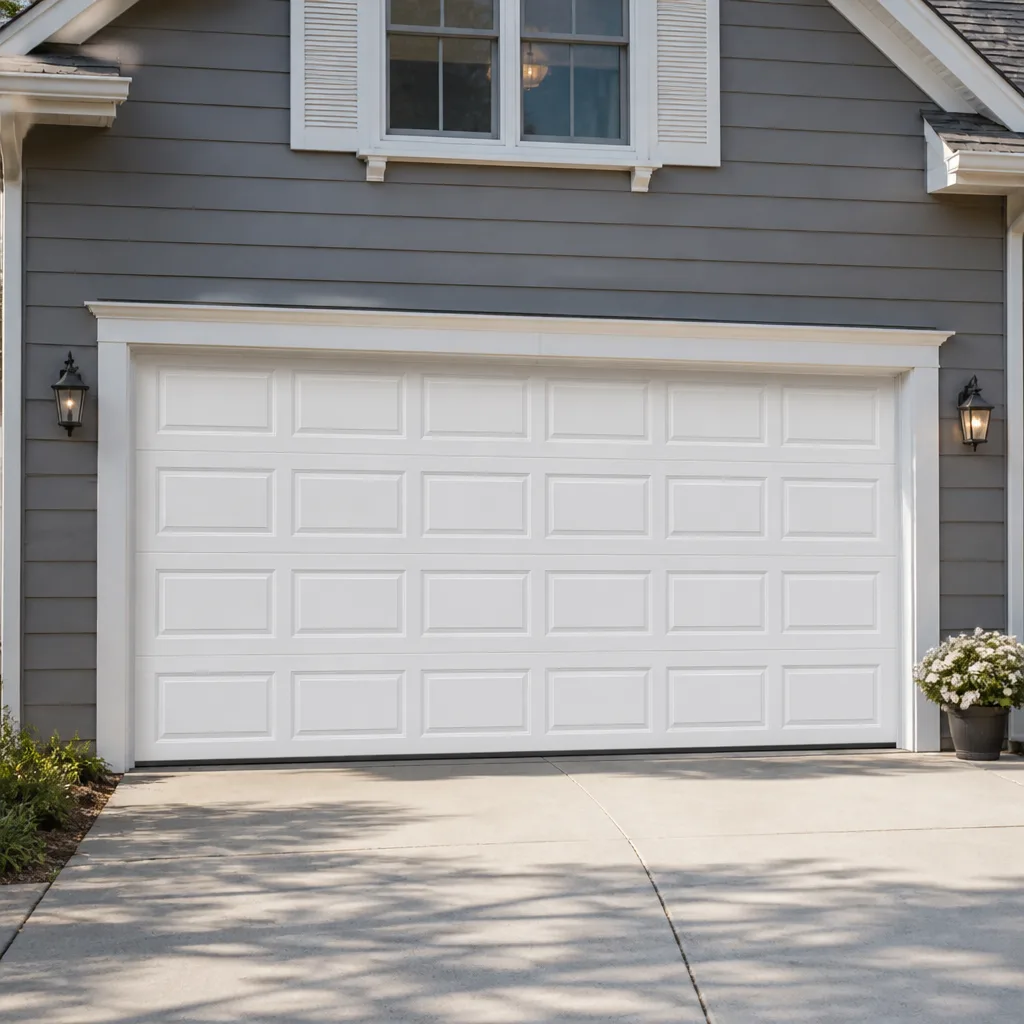 Raised-panel steel
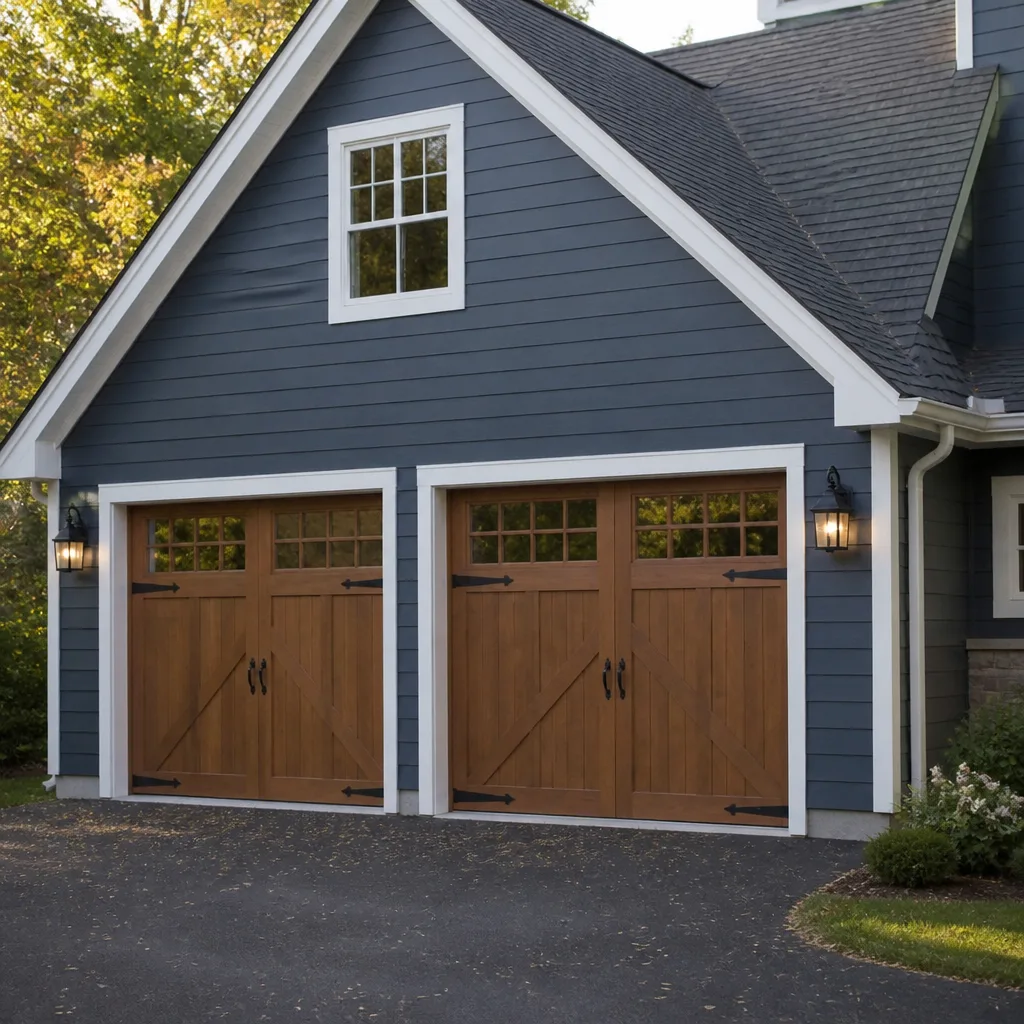 Carriage house
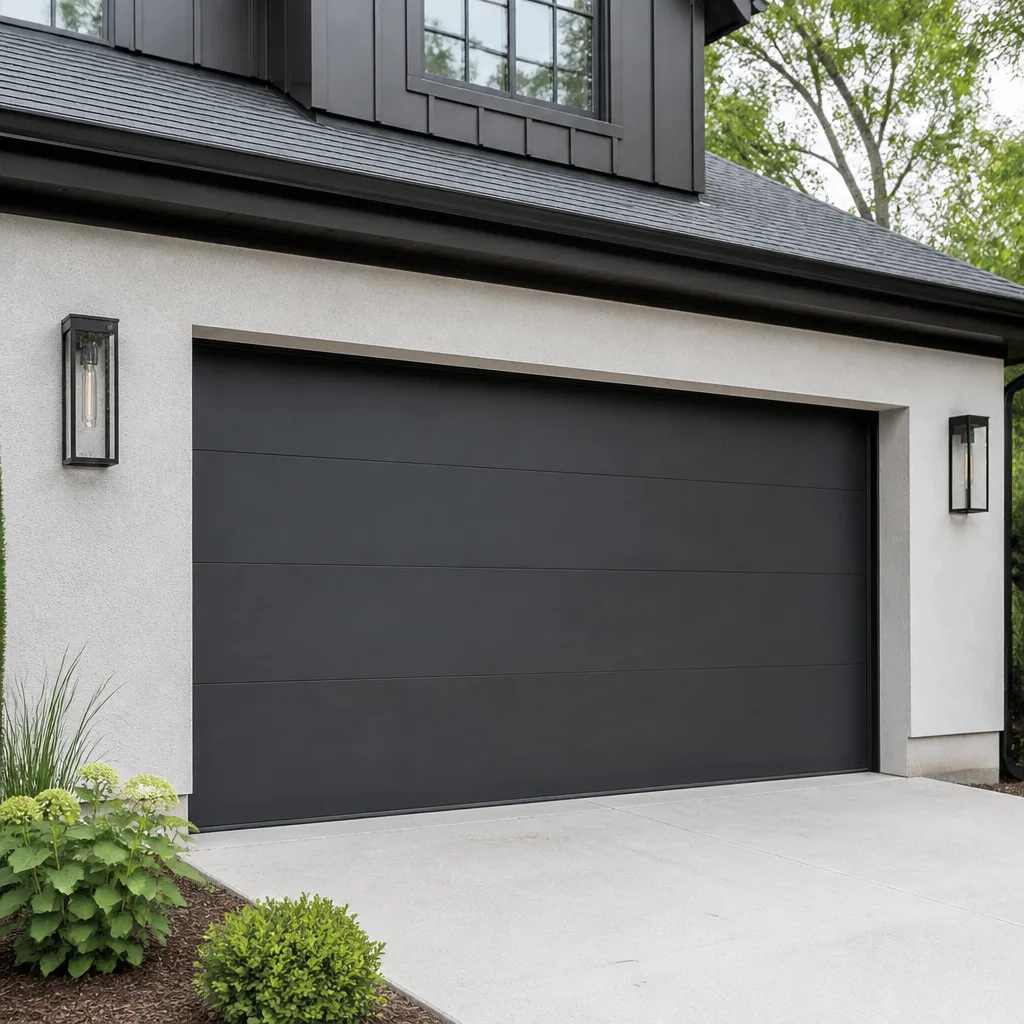 Modern flush
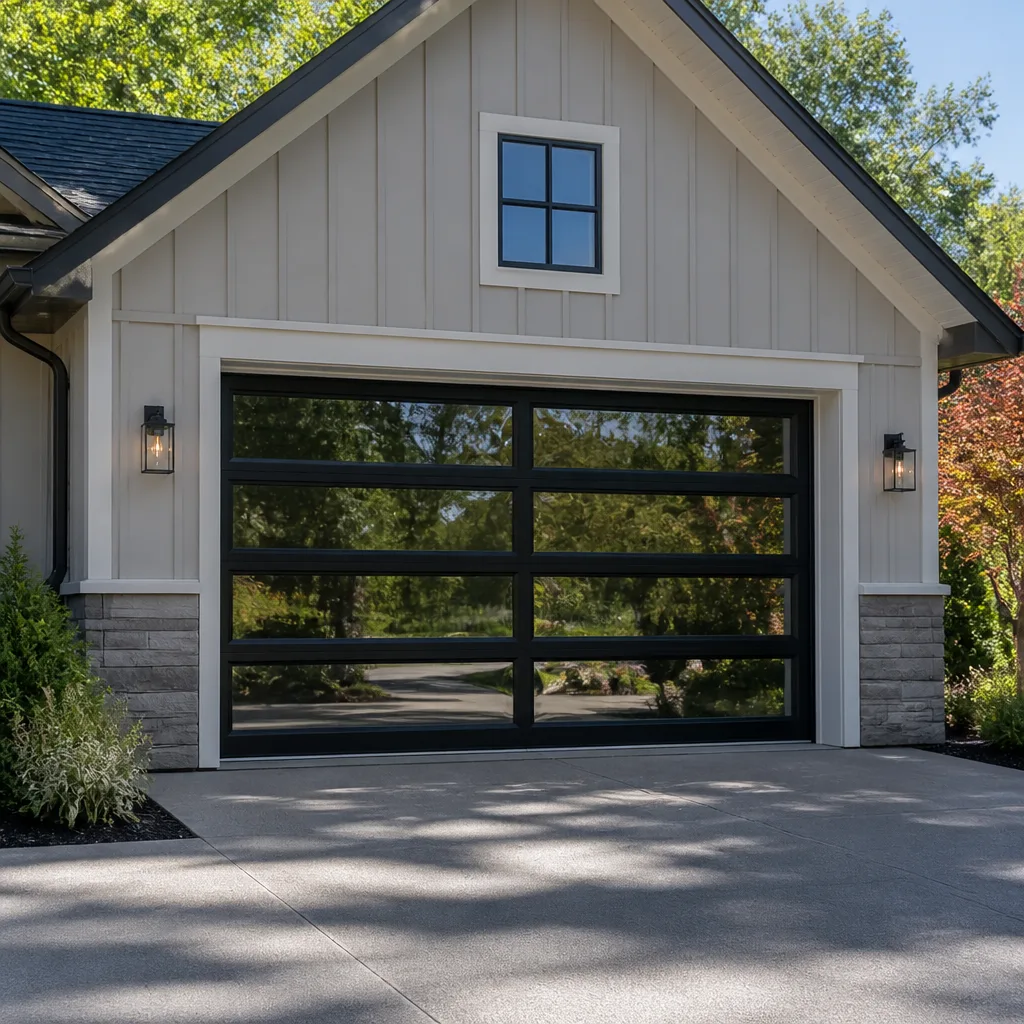 Full-view glass
 LiftMaster openers
 Chamberlain openers
Full 25-point door and opener safety check with every visit - springs, cables, rollers, tracks, and your LiftMaster or Chamberlain opener included
You get a price before we start. It does not change when the pro arrives.
Get your free estimateThe Complete Guide to Garage Doors in Puyallup
The counterintuitive thing about garage doors in Puyallup is that our climate breaks them faster than the motor does. The moving parts you worry about – the opener, the rollers, the hinges – usually outlast the parts that just sit there: springs, seals, wood panels, and metal skins. Between wet winters, dry August heat, and a swing of thirty-plus degrees between seasons, a Puyallup door goes through more expansion, contraction, and moisture cycling in one year than a door in Phoenix sees in five. Most homeowners only notice when something snaps. This guide is about what happens before that – how to read the condition of your door, which materials actually fit a Puyallup house, what your specific model tends to fail at, and when “replace it” is genuinely true and when it’s just easier to sell. By the end you’ll know your own door better than the person quoting you a new one.
Quick Answer
Most garage doors in Puyallup fail because of moisture and temperature cycling, not mechanical wear alone: wet winters corrode springs and rot wood panels, dry summers warp them, and the cumulative strain shows up in bottom seals, bearings, and spring life. Repair (not replacement) is the right call for the majority of problems – a single failed component on an otherwise sound door. Replacement is genuinely warranted only when the door structure itself fails: cracked or sagging panels, a bent track that won’t realign, or rot that has moved into the frame.
For a quick health check, run through this in two minutes before you decide anything:
- Balance test: unhook the opener and lift the door halfway. It should hold. If it drops, the springs or balance are wrong.
- Seal check: look along the bottom seal for daylight, tears, or a seal that has gone stiff and flat.
- Visual sweep: check for rust weeping from springs, wood panel cupping or soft spots around the bottom rail, and any bend in the track.
- Noise and speed: grinding, a door that jerks, or a door that opens slower than it used to all signal bearing or spring issues heading downhill.
Styles & brands we work with
- Raised-panel steel
- Carriage house
- Modern flush
- Full-view glass
- LiftMaster openers
- Chamberlain openers
Table of Contents
- How Puyallup’s Climate Affects Your Garage Door
- Which Door Materials Hold Up Best in Puyallup
- The Condition Checklist: What to Look For Before You Call
- Repair vs. Replacement: The Thresholds That Matter
- Common Brands in Puyallup Homes and Their Known Weak Points
- Springs and Openers: The Two Most Misunderstood Parts
- What Garage Door Work Costs in Puyallup
- The Maintenance Calendar That Adds Years to Your Door
How Puyallup’s Climate Affects Your Garage Door
Garage doors in Puyallup live in one of the harder environments in the country, and it isn’t because of extreme cold or heat. It’s the wet-dry cycling. Winters bring weeks of steady rain and damp air that never fully dries out, and then late spring and summer swing hard in the other direction. Every piece of metal, wood, and rubber on your door expands, contracts, absorbs, and dries – dozens of times a year. That cycling is what a technician means when they say a door has “age” on it, and it’s why a ten-year-old door in Puyallup can be in worse structural shape than a fifteen-year-old door in eastern Washington.
Three specific failure patterns show up over and over in Puyallup:
- Spring corrosion. Torsion springs are oil-tempered steel wire under constant tension. In a damp climate, surface rust appears quickly, and rust is a stress riser – it cuts spring life meaningfully versus the same spring in a dry climate. When a spring fails, it’s more often from corrosion-initiated fatigue than from too many cycles.
- Wood panel rot and cupping. Wood doors are gorgeous in Puyallup, but the bottom rail and any panel with a horizontal seam collects water. Once water wicks into the joint, the panel swells, then shrinks as it dries, and the paint film fails. From there, rot moves slowly and invisibly until the panel’s structure gives.
- Bottom seal failure. The bottom seal takes the biggest beating of any rubber on the door because it sits in splashback from rain and gutter runoff. In Puyallup, a seal often goes stiff and brittle two to three years before a homeowner notices the gap – which then lets in water, which then feeds everything above.
The upside: because the climate is predictable, the failure patterns are too. A door that’s inspected and maintained each fall in Puyallup routinely outlasts the same door in a home that never touches it. The seal is the first domino, and it’s also the cheapest one to replace.
Which Door Materials Hold Up Best in Puyallup
Marketing has a lot of inertia in this category, and some of the most heavily promoted door styles are also the least suited to Puyallup’s weather. Here’s how the common garage door materials actually perform in a Puyallup climate, ranked roughly by how well they handle wet winters:
- Insulated steel: the best all-around fit for Puyallup. Steel skins don’t absorb moisture, don’t warp, and insulated cores control condensation inside the garage. The failure mode is dents and rust at the bottom edge, which is a repair not a replacement when caught early. This is what most Puyallup homes should have.
- Aluminum: light and rust-proof, good for salt-free wet climates like ours (there’s no coastal salt air issue in Puyallup – that’s a marketing myth borrowed from coastal cities). Lower impact resistance than steel, so it dents more easily, but it holds up well to humidity.
- Composite and modern wood-look: a strong option for homeowners who want the wood aesthetic without wood’s maintenance. Composite skins don’t absorb water, so rot is a non-issue. Price point is higher than steel, but the maintenance savings over a decade make up the difference in this climate.
- Real wood with a good painted or stained finish: beautiful, and durable if maintained. In Puyallup, that means recaulking and repainting the bottom rail every 2-3 years – no exceptions. The failure mode is panel rot, which is a full replacement if it gets into the rail.
- Uninsulated steel: cheap and durable, but in a Puyallup winter the inside of an uninsulated steel skin sweats from condensation on the damp side of the door. It doesn’t fail structurally, but it does rust the hardware faster.
What gets marketed heavily but fits poorly here: glass-panel doors in north or west-facing garages (condensation, fog, and heat loss), and any wood door installed with a bottom seal that doesn’t drain. Both are common in newer construction and both are easy to correct if you know what to look for.
The Condition Checklist: What to Look For Before You Call
If you can spend five minutes with a flashlight, you’ll walk into any service conversation already knowing roughly what’s wrong – and whether the person on the phone is trying to upsell you. Here’s a numbered visual and operational check. Do it with the door down first, then run the door once and repeat.
- Walk the bottom seal. Look for daylight under the door, tears, flattening, or a seal that’s gone hard. A seal that pulls away from the door means the bottom edge of the door is also exposed.
- Look at the springs. Two springs across the shaft above the door means torsion; a spring on each side parallel to the track means extension. Look for visible rust weeping, a gap in the coil, or one spring hanging loose. A snapped spring is obvious; a rusting one is the warning shot.
- Check the panels, bottom to top. Cupping (a slight inward bow), separation at seams, or a soft spot when you press near the bottom rail on wood doors. Any panel flex is worth noting.
- Look at the track. A vertical track should be straight – any bend means rollers are running misaligned, which wears the rollers fast and strains the opener.
- Run the door and listen. A grinding (bearings), a rhythmic squeak (rollers or hinge pins), or a door that speeds up or slows down in the middle of travel (spring tension dropping).
- Do the balance test. With the opener disconnected and the door about halfway up, it should hold position. If it drifts down, springs need attention.
- Test the safety reverse. Place a roll of paper towels under the door and close it. It should reverse on contact. If not, that’s a safety system issue, not a cosmetic one.
Bring this list to a technician and you’ll skip half the guessing, and you’ll spot the moment someone starts talking about replacement before talking about what actually failed.
Repair vs. Replacement: The Thresholds That Matter
Most “you need a new door” conversations happen because the repair options weren’t fully considered, not because the door is actually dead. In our experience, replacement is genuinely warranted only when the door’s structure has failed or is far enough gone that no repair will hold. That’s a smaller set of situations than it sounds like. Here are the mechanical thresholds that genuinely justify replacement, versus the ones that are almost always a repair:
Repair is the right call when:
- A single component failed – a spring, an opener, a roller, a hinge, a balance cable. The door is intact.
- The bottom seal is worn, torn, or flattened. That’s routine maintenance, not a signal to junk the door.
- The opener is dead, noisy, or not reversing properly, but the door panels and track are sound. This is the most common example in Puyallup, and the repair is almost always confined to the opener.
- One panel is dented or damaged. On a sectional door, individual panels are often replaceable, which is a far cheaper path than a whole door.
- The track is bent but not kinked. A track realignment handles this.
Replacement is genuinely warranted when:
- Wood panels have rotted into the bottom rail, or the frame around the garage opening is soft. Repair can’t fix framing rot – it has to be rebuilt.
- Multiple panels are structurally damaged (not just cosmetically dented), or a panel has lost its structural skin and the door sags visibly at rest.
- The track is kinked beyond realignment, or the door leans far enough off the horizontal track that the rollers bind regardless of adjustment.
- The balance is so far off that new torsion springs won’t hold it – usually a sign the shaft bearings or drums are gone beyond rebuild.
- The door is a type that simply doesn’t fit the house anymore (e.g., a single-skin uninsulated panel in a garage that has become a workshop) and you’re going to replace it for reasons other than failure.
The short version: a working door is worth repairing. A structurally failing door isn’t. The gap between those two is where most decisions get made, and it’s a gap you can diagnose from the checklist above rather than from a sales pitch.
Common Brands in Puyallup Homes and Their Known Weak Points
The garage door brands installed in Puyallup homes fall into a fairly predictable set, and each one has its own quirks with age. Knowing your brand doesn’t tell you exactly what will fail, but it tells you what to look at first. Our technicians work on eight major brands – LiftMaster, Chamberlain, Genie, Clopay, Amarr, Wayne Dalton, Craftsman, and Raynor – which means we land knowing the common failure pattern instead of learning it on the spot.
- Clopay doors are everywhere in Puyallup’s newer subdivisions. Their insulated steel panels wear well in this climate, but the bottom seal on older models is thin and goes first. Watch the bottom rail for rust at the edge where the seal meets the door.
- Wayne Dalton doors tend to have slightly lighter-gauge tracks than other brands, which means a bent track from a bumped vehicle shows up more often. The panel skins are solid; the track and rollers are what wear first.
- Raynor doors show up on many older Puyallup homes. Their steel skins are durable, but the hardware (hinges and rollers) is where the wear shows. On Raynor doors past a certain age, expect to replace rollers as part of any repair, not just the failed component.
- Amarr doors are common in mid-2000s construction around Puyallup. Solid doors, with the caveat that on models with a decorative window row, the window inserts tend to fog and can loosen over time – a cosmetic issue that’s easy to misdiagnose as panel failure.
- Craftsman-branded doors and openers are legacy-heavy in Puyallup, particularly on homes built in the 90s and 2000s. The doors are durable; the openers are the piece that ages out. Craftsman chains and gears are commonly the failure point after years of use.
Pair a brand name with a rough age and you’ll usually predict the first repair. That’s the whole point of tracking brands – not brand loyalty, but being ready for what’s likely to go.
Springs and Openers: The Two Most Misunderstood Parts
If a door isn’t opening, most homeowners assume it’s the opener. In reality, roughly half the “opener won’t open the door” calls we see in Puyallup turn out to be a spring problem, a balance problem, or a safety sensor issue – not the opener itself. Getting this diagnosis right the first time is what keeps a $200 problem from turning into a $600 problem.
Springs
A torsion spring (the one across the shaft above the door) is a tightly wound steel coil under enormous stored energy. When it’s working correctly, it counterbalances the weight of the door so the opener only has to push a hundred pounds or less. When a spring snaps, the door becomes hand-crushing heavy – which is exactly why we treat spring replacement as a professional-only job. A spring that’s failing slowly (rusting, losing tension) shows up as a door that suddenly feels heavy at the top of travel or opens slower than it used to. Catching it at that stage is safer and cheaper. If you live anywhere in Puyallup from South Hill to the downtown corridor, the damp winter air is what’s shortening the spring’s life, so a spring inspection each fall is real preventive work. Never adjust, cut, or replace a spring yourself – the stored energy in a torsion spring can cause serious injury, and installation requires winding bars and a trained hand.
Openers
Opener repair spans two very different eras of equipment: legacy RF (radio-frequency) openers – the older LiftMaster, Chamberlain, Craftsman, and Genie models that use a fixed code – and modern smart-home-connected units that pair with an app. Both are still common in Puyallup. Older units tend to fail at the logic board or the drive gear; newer units tend to fail at the safety sensors or the WiFi module. The symptoms look similar (door won’t close, door reverses unexpectedly), which is why diagnostics matter. Check the sensors first – a misaligned photoelectric eye on a damp Puyallup morning is the single most common cause of “the opener won’t close the door.”
If you’re weighing whether the opener or the door is the issue, run this quick test: pull the manual release cord near the opener rail, then lift the door by hand. If it moves freely, the issue is the opener. If it fights you or won’t hold, the issue is the door.
What Garage Door Work Costs in Puyallup
Cost is where Puyallup homeowners get the most contradictory information, so here’s a straight answer on what drives it. Every job is quoted per job – a written estimate before any work begins is the price, not a rough guide that gets adjusted after the fact. What follows are typical ranges for common work in this market, not a promise of a specific invoice.
- Spring repair (one spring): typically $180-$340 for a single torsion spring replacement on a standard residential door. If both springs are the same age and matched, they’re usually replaced together, which roughly doubles that number. One spring price is not the pair price.
- Opener repair: typically $150-$400 depending on the component (a circuit board, drive gear, or sensor set is very different from a full motor). Unusual for this to exceed $500 unless the opener is at end-of-life and full replacement is the honest recommendation.
- Door repair (rollers, hinges, cable, track): typically $150-$450 depending on which component failed and how many need replacing.
- Bottom seal replacement: typically $100-$250, depending on door width and seal type.
- Full door replacement: typically $900-$2,500 for a standard single-car door installed, and $1,500-$4,000 for a double-car door. That’s the range where replacement genuinely competes with repair, and it’s not where most jobs land.
The written estimate is what the job costs. That means the price is quoted and agreed before work starts – there’s no “we got out there and found more” adjustment unless you approve it. Free estimates mean you can get a written number without committing to the work. If a quote feels high, the right question isn’t “is this the cheapest” – it’s “what specifically failed, and why is this the fix?”
The Maintenance Calendar That Adds Years to Your Door
A little work twice a year makes the difference between a door that lasts and a door that needs an early replacement – especially in Puyallup’s climate. Here’s the calendar we’d suggest to any Puyallup homeowner, worked around the two seasonal swings:
- October (before the wet season): check the bottom seal and the bottom rail of the door. If either has wear, this is the cheapest time to fix it. Lubricate rollers, hinges, and the torsion shaft with a garage-door lubricant (not WD-40).
- November: test the safety reverse on the opener. Look at the springs for rust – a light layer is expected; visible pitting or flaking is a sign to have them inspected.
- January-February: after the first hard stretch of wet weather, check the bottom of wood doors for soft spots and recheck the seal. Confirm the door drains water away rather than pooling at the base.
- April: after the wet season, do a full visual pass – look for cupping in wood panels, bent track, and loose hinges. Reapply lubricant to the moving parts.
- July: check for summer-driven issues – warping of wood panels, expansion stress in the track, and any opener overheating from a warm garage.
- Monthly, year-round: do the safety reverse and the balance test. Both take under a minute and catch the issues that would otherwise surprise you.
The two things that make the biggest difference: keep the bottom seal intact (every other moisture problem starts there) and keep the moving parts lubricated. Neither takes real skill – they take a few minutes twice a year.
Common Mistakes to Avoid
- Replacing a door because you had a spring break. A snapped spring is the single most common garage door failure, and it’s also the most easily repaired. A spring isn’t the door – don’t let a worn-out component talk you into a full replacement.
- Assuming the opener is the problem. “The door won’t open” is often a spring, balance, or sensor issue, not the opener. Diagnose the door before replacing the opener – the fix may be far cheaper.
- Skipping the bottom seal as “cosmetic.” In Puyallup, an ignored seal lets water into the bottom rail, which is where wood rot begins. It’s a small repair that prevents a large one.
- Doing spring work yourself. Torsion springs store enough energy to cause serious injury. If the spring needs replacing, stop and call a technician – no DIY tutorial makes it safe.
- Choosing a wood door with no maintenance plan. Wood is fine in Puyallup – but only if you’re committed to recaulking and repainting the bottom rail every 2-3 years. If you’re not, a composite or steel door will serve you better.
- Ignoring a bent track because the door still runs. A slightly bent track wears rollers, hinges, and eventually the opener motor. Fix it early and the rest of the door lasts longer.
- Calling a generalist for spring work. Garage door spring repair is a specialized job. A handyman who says “sure, I’ve done that” isn’t the same as a garage-door specialist, and the stakes are the safety of everyone in the house.
See the difference
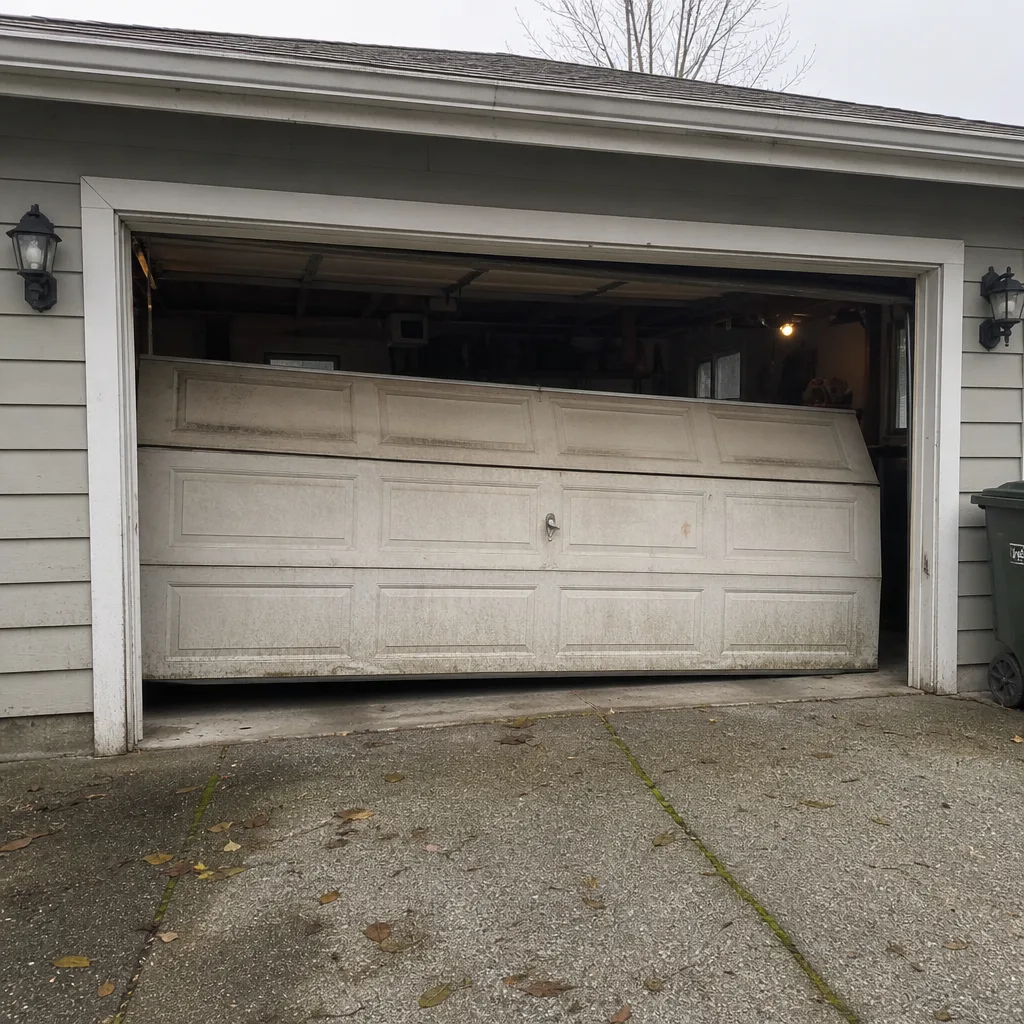 Before
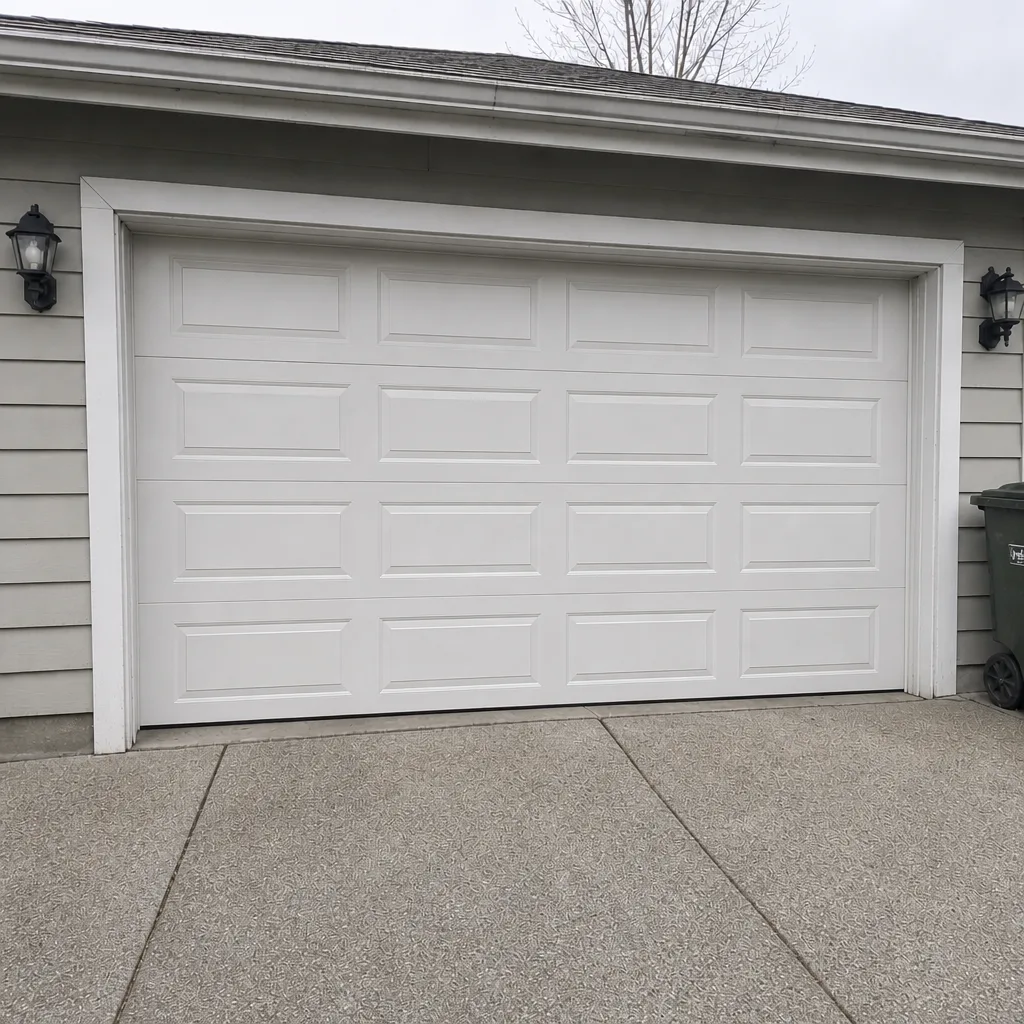 After
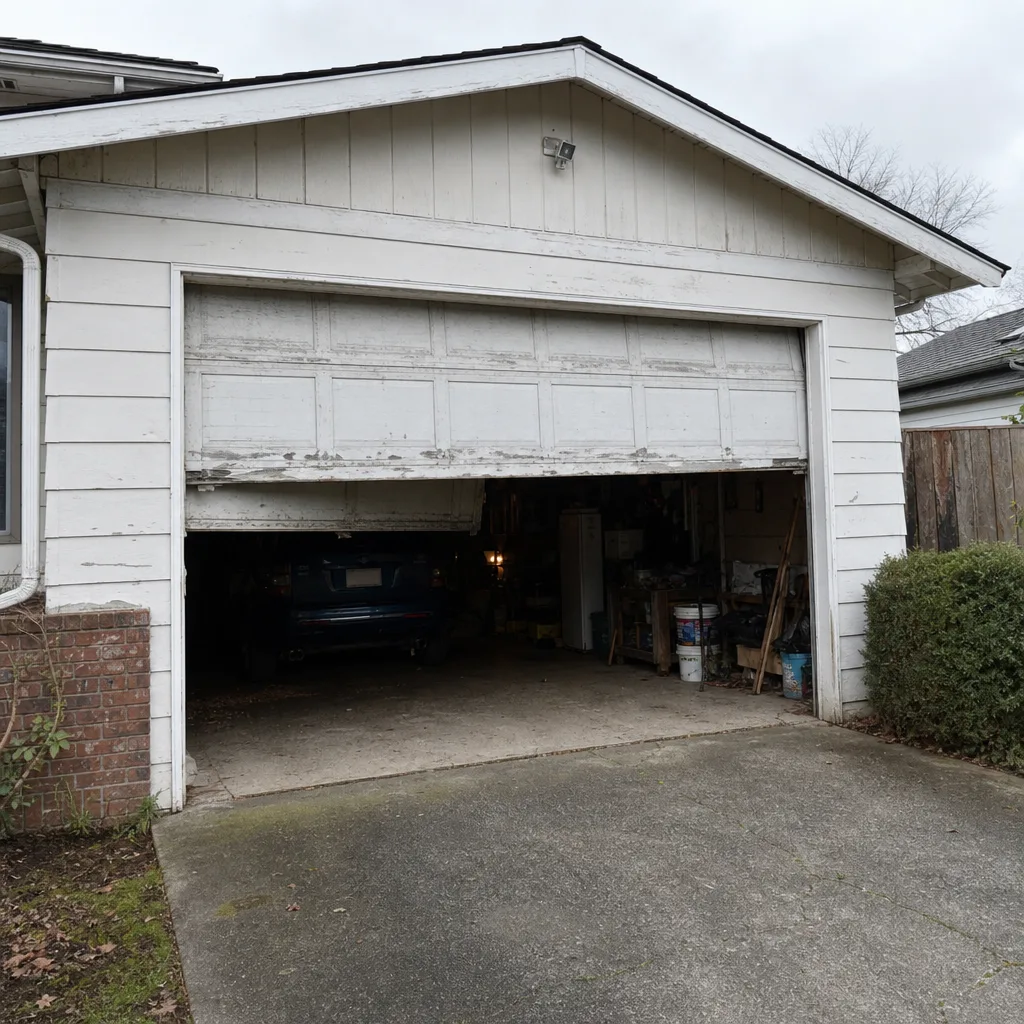 Before
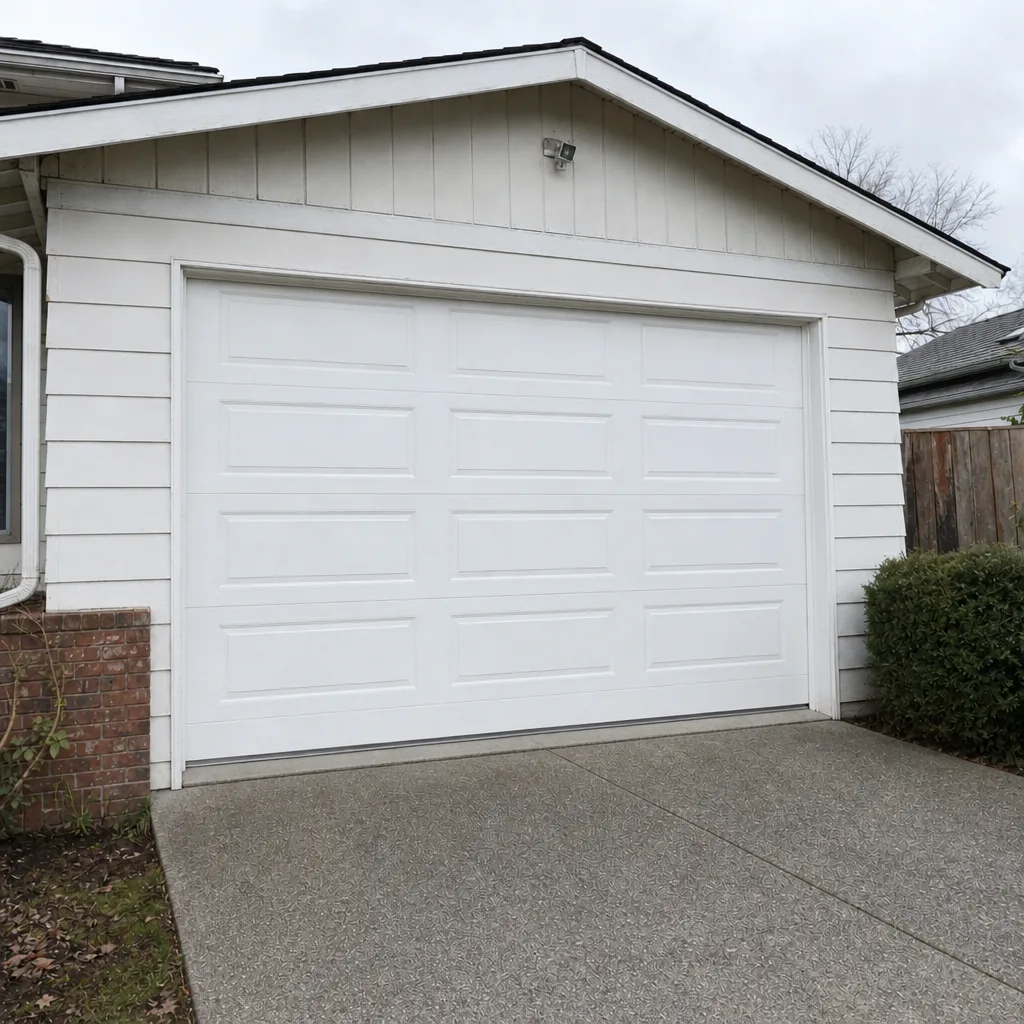 After
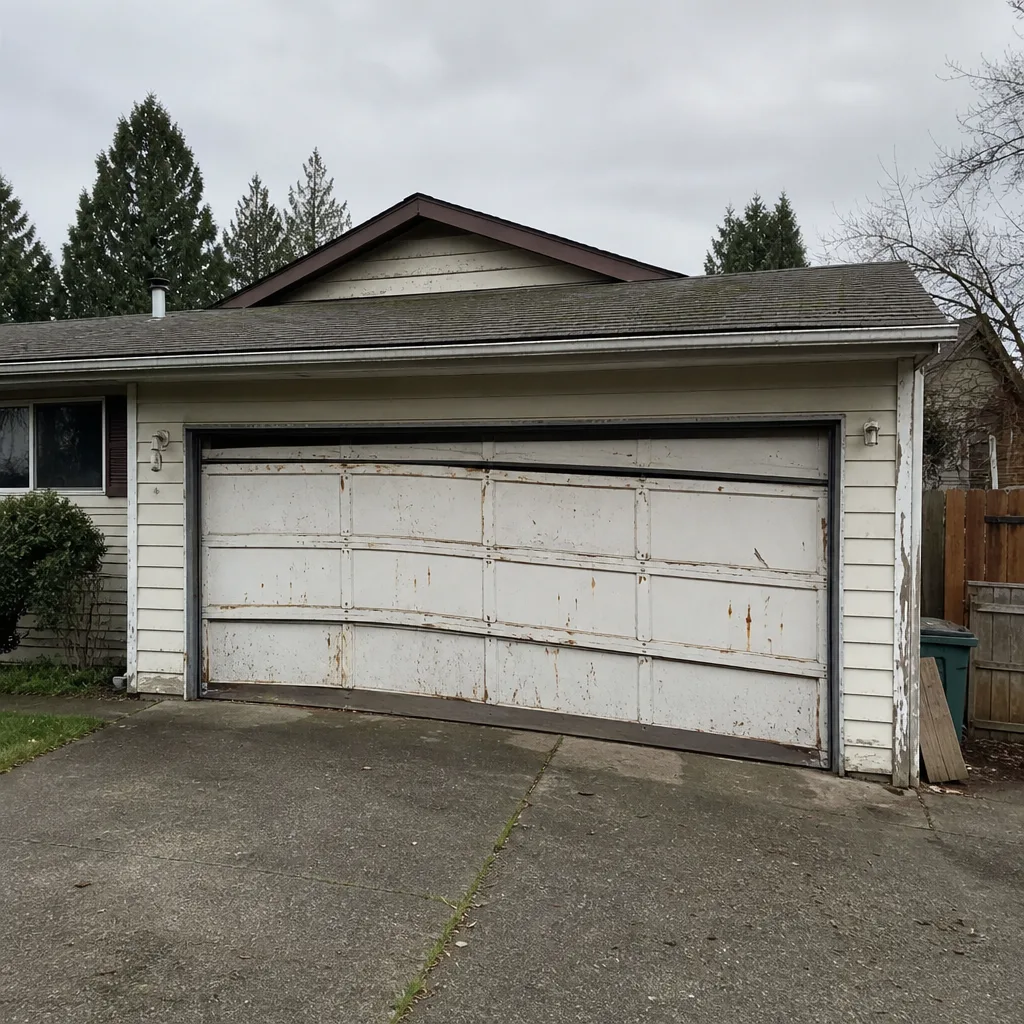 Before
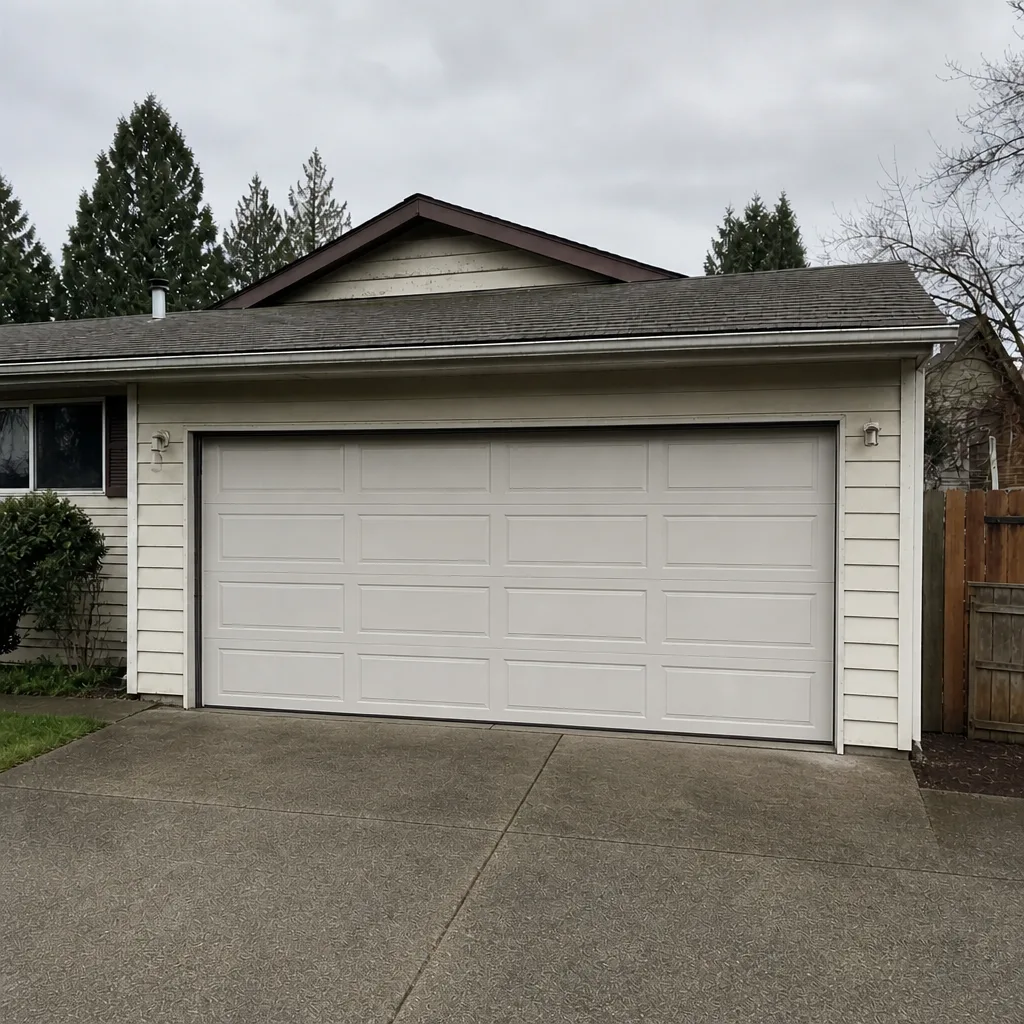 After
When to Call a Professional
Some garage door problems are safe to look at, and some aren’t. The line between them is straightforward. Call a professional when: a spring has snapped or is visibly rusting at the coil; the door won’t stay up on the balance test; the door has come off the track; any panel is sagging or one side lifts higher than the other; the manual release cord pulled the door into freefall; or the opener is cycling erratically, running hot, or refusing to reverse. Any of those is a signal that the door’s energy balance or a safety system is out of spec, and neither is a job for a homeowner. Puyallup Garage Door Repair Pros offers free estimates in Puyallup for all of these – call (844) 668-5460. Our technicians have up to 13 years of experience on LiftMaster, Chamberlain, Genie, Clopay, Amarr, Wayne Dalton, Craftsman, and Raynor equipment, so we land already familiar with yours. We answer 24/7. Fast dispatch from 7am to 7pm, Sunday through Friday.
Frequently Asked Questions
Garage door spring repair in Puyallup typically runs $180-$340 for a single torsion spring, and about double that when both matched springs are replaced together, which is usually the right call. The written estimate you receive is the price – quoted and agreed before any work starts. Call (844) 668-5460 for an exact quote – estimates are free.
Often yes – a broken spring, snapped cable, or an opener that’s stopped working is exactly the kind of call we handle same-day. Fast dispatch from 7am to 7pm, Sunday through Friday, and we answer 24/7. A call outside dispatch hours is booked into the next opening, Sunday through Friday, 7am to 7pm. Call (844) 668-5460 to check today’s availability – estimates are free.
It’s often the spring, not the opener. Pull the manual release cord near the opener rail, then lift the door by hand. If it lifts easily and holds, the door’s fine and the problem is the opener. If it’s heavy or drops, the spring or balance is the issue – and that’s a technician call. Call (844) 668-5460 to get a diagnostic; estimates are free.
The written estimate sets the price – it’s quoted and agreed before any work starts, and it doesn’t drift once the technician is on site. If we find something on the door that wasn’t in the original diagnosis, you’ll hear about it before we touch a wrench, and the price only changes if you approve the change. Call (844) 668-5460 for a free written estimate – the number we quote is the number you pay.
Yes – the local technicians we connect you with are licensed and insured as the state of Washington requires, and spring work is one of the most safety-critical jobs in the trade, so we require real experience, not just a general-handyman card. Call (844) 668-5460 with any questions before the visit – estimates are free.
Most garage doors that are still structurally intact can be repaired – a failed spring, a dead opener, a worn seal, a bent track, a single damaged panel are all repair jobs, not replacement jobs. Replacement is genuinely warranted only when the door’s structure has failed: rot in the frame or bottom rail, multiple structurally damaged panels, or a kinked track that won’t realign. Call (844) 668-5460 for a free diagnostic – we’ll tell you honestly which of the two you’re looking at.
The Bottom Line
Garage doors in Puyallup don’t fail because of the motor – they fail because of what the climate does to everything else. Wet winters rust springs, rot wood, and wear out seals; dry summers warp panels and stress tracks. The single most useful thing a Puyallup homeowner can do is the two-minute visual and operational checklist above, done in October and April. It tells you what’s wearing, what’s failing, and whether the fix is a component or a whole door. Repair is the right answer in the great majority of cases – and the few cases where replacement is genuinely warranted are specific and diagnosable. If you want a straight answer on your own door, we’re here to give one. Call (844) 668-5460 for a free estimate. We answer 24/7. Fast dispatch from 7am to 7pm, Sunday through Friday.
Written by the team at Puyallup Garage Door Repair Pros.