
Last updated November 20, 2026
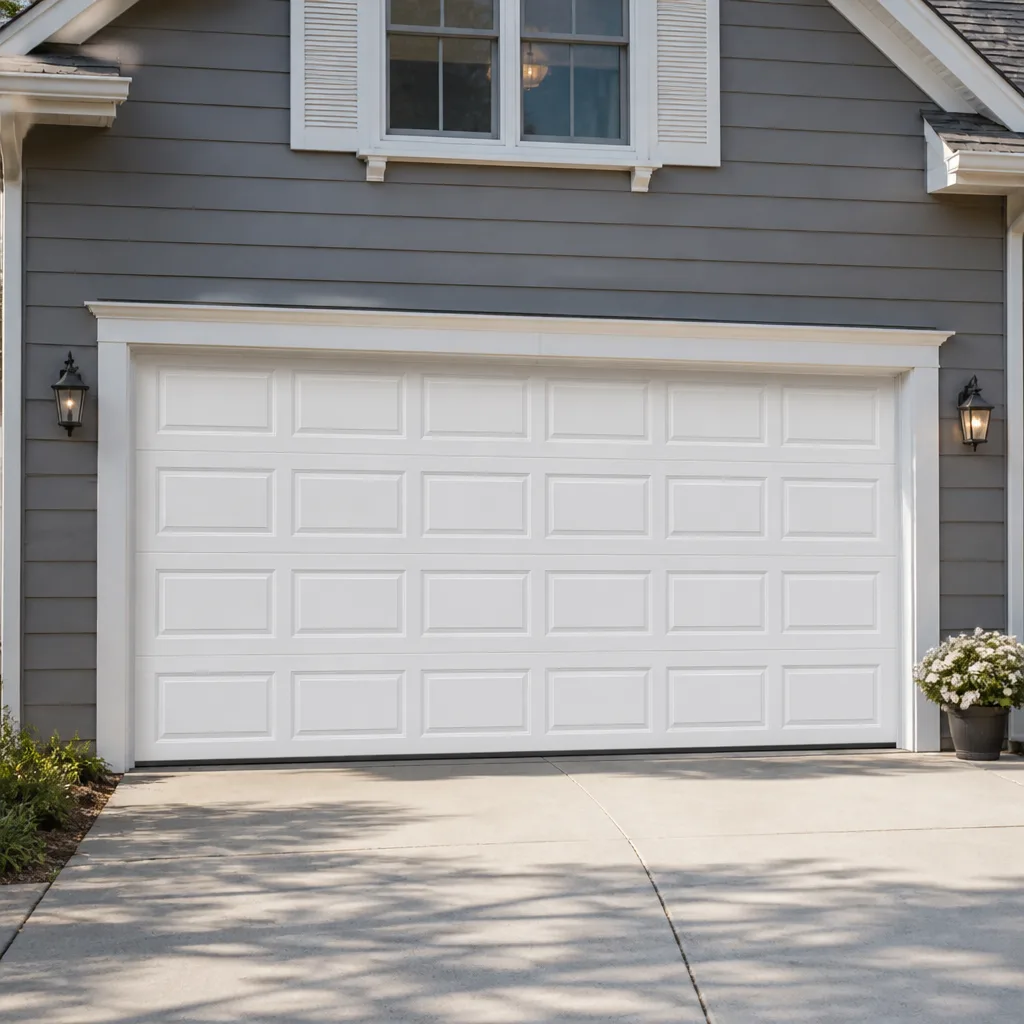 Raised-panel steel
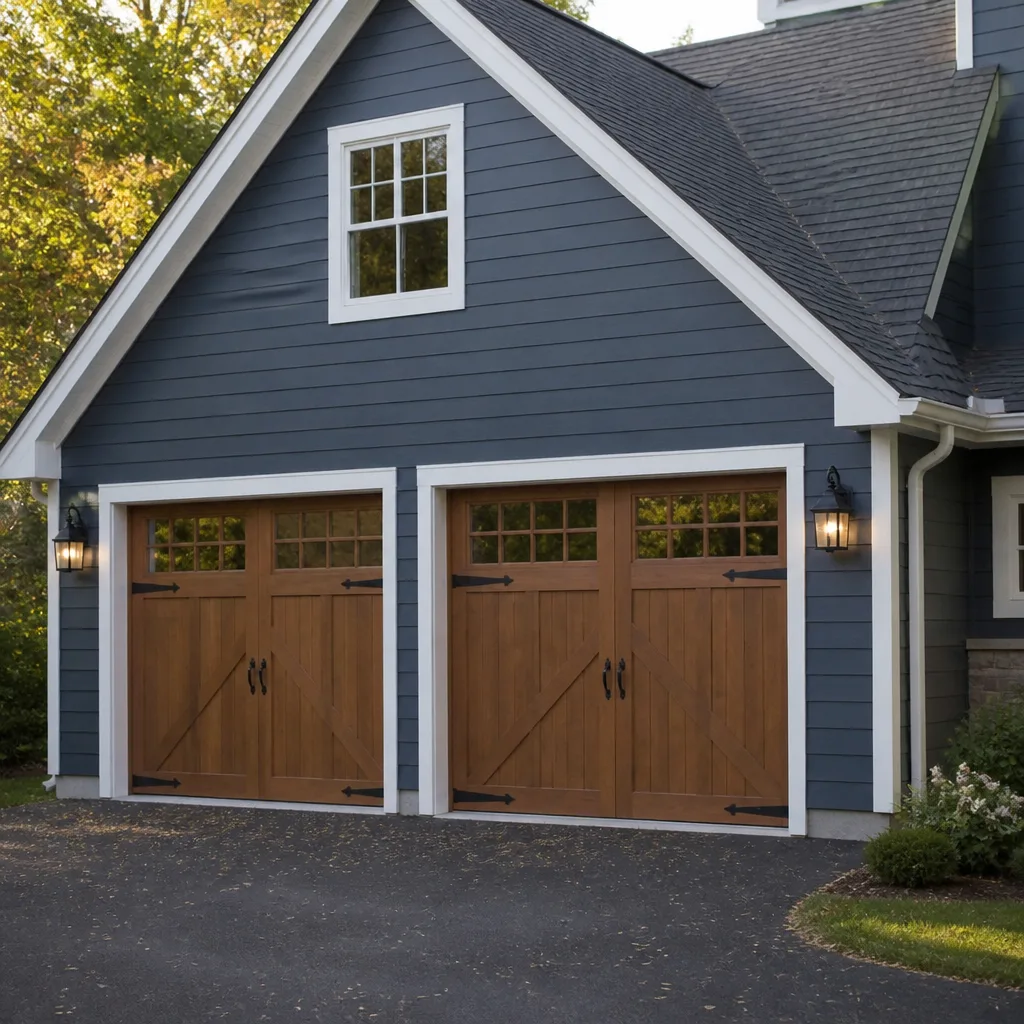 Carriage house
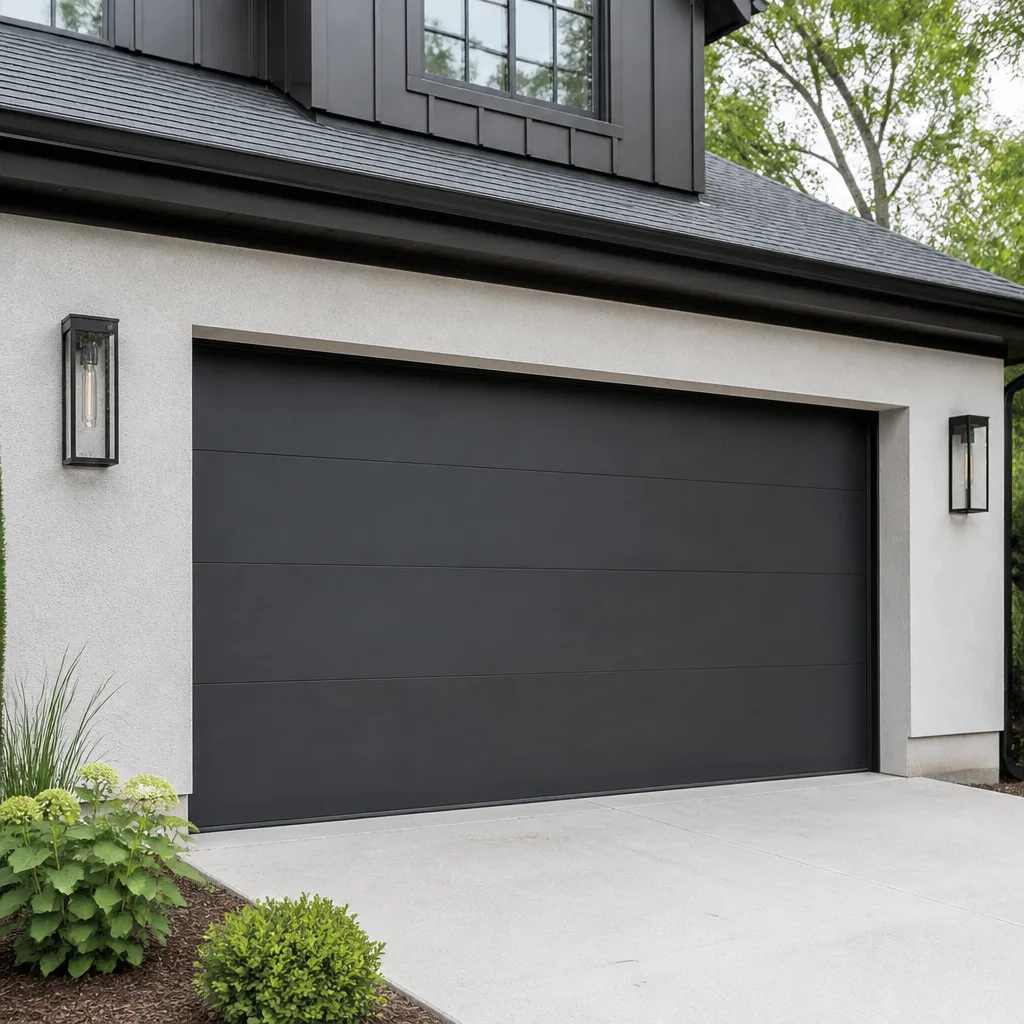 Modern flush
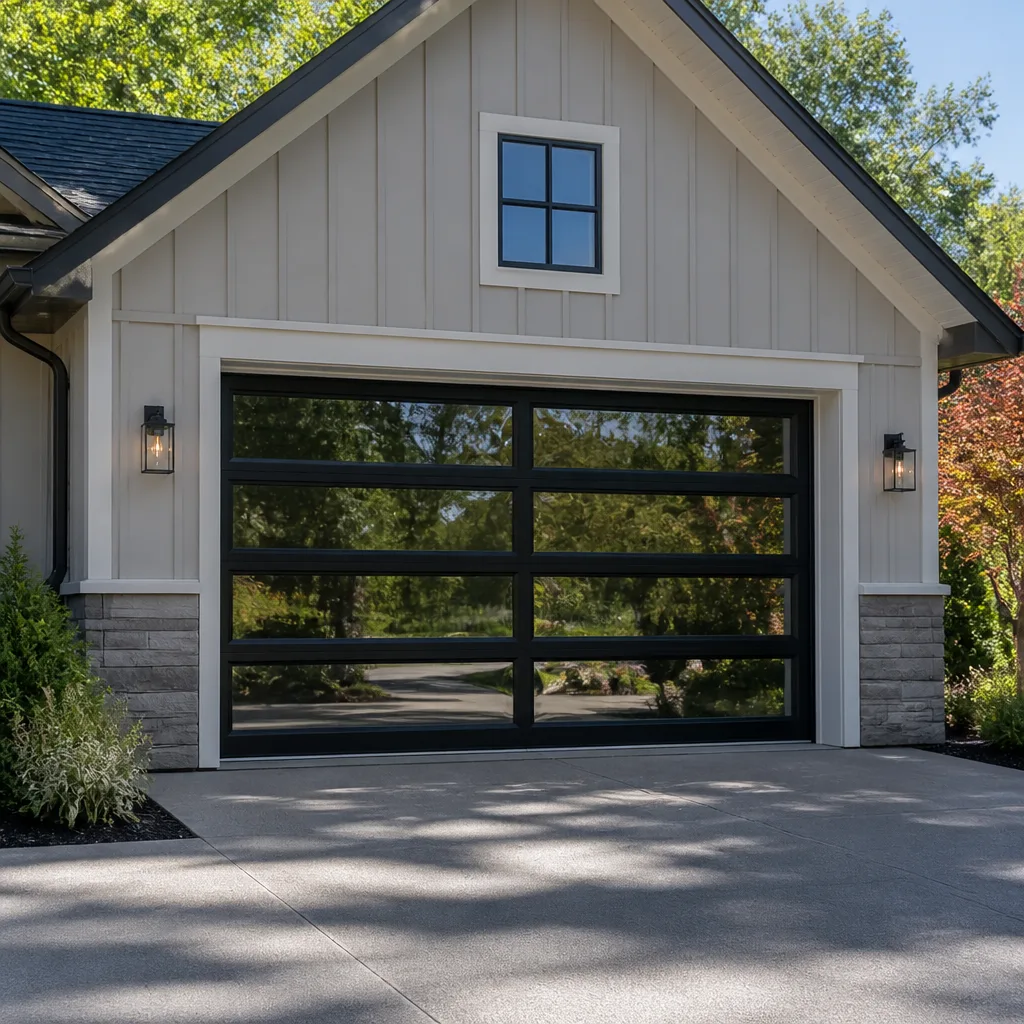 Full-view glass
 LiftMaster openers
 Chamberlain openers
Full 25-point door and opener safety check with every visit - springs, cables, rollers, tracks, and your LiftMaster or Chamberlain opener included
You get a price before we start. It does not change when the pro arrives.
Get your free estimateHow to Hire a Garage Door Contractor in Puyallup: A Step-by-Step Guide
A garage door company that sells doors has a structural financial incentive to recommend replacement. A company that only repairs doors, openers, and springs does not. Most homeowners never think about that difference while standing in their driveway, phone in hand, because the website copy and phone quotes sound nearly identical. The real question isn’t which company is cheapest. It’s which one is built to fix what you have. This guide walks you through the questions to ask before booking, what a real diagnostic visit looks like, how Washington licensing works, and how to read a quote closely enough to spot the sales pitch hiding inside it. Every step applies whether you’re in Sunrise, South Hill, or anywhere else in Puyallup.
Quick Answer
To hire a garage door contractor in Puyallup, verify the company is licensed and insured in Washington, ask whether they are repair-first or replacement-first before you book, request an itemized written quote that separates parts from labor, and confirm the technician recognizes your specific brand (LiftMaster, Chamberlain, Clopay, Raynor, and others). A legitimate diagnostic visit involves inspection and explanation before any recommendation to replace. A sales call disguised as a service call involves a same-day ultimatum and a new-door price on the first visit.
Styles & brands we work with
- Raised-panel steel
- Carriage house
- Modern flush
- Full-view glass
- LiftMaster openers
- Chamberlain openers
Table of Contents
- Why the Repair-First Versus Replacement-First Distinction Matters
- garage door repair Questions to Ask Before You Book
- What a Legitimate Diagnostic Visit Looks Like
- Washington State Licensing: How to Verify in Under Two Minutes
- Red Flags in a Garage Door Quote
- How to Compare Quotes When Parts Differ
- Puyallup Climate and Housing: What It Means for Your Door
- Matching the Contractor to the Failure
Why the Repair-First Versus Replacement-First Distinction Matters
A replacement-first dealer sells new doors. Repair is a lead-in to that sale. When a technician from that kind of company walks into your garage, the incentive is baked into the business model: an eight-year-old door with a snapped spring becomes a conversation about replacement rather than a spring swap. That can feel reasonable in the moment. It rarely is.
A repair-first specialist makes money by diagnosing and fixing the actual failure. Doors, openers, and springs become three distinct problem categories, each with its own diagnostics and its own fix. There’s no showroom inventory to move and no push toward a full replacement when the panel, spring, or opener logic board is the only thing broken.
For Puyallup homeowners, this matters for two reasons. First, the housing stock here spans older construction with original hardware in neighborhoods like Meeker and newer builds in South Hill, so a technician has to know both the legacy RF openers and the smart-home-connected systems. Second, the spring itself is a safety-critical part. A replacement-first company that doesn’t do much spring work still sells the swap. A repair-first company that does spring work as a core offering knows the difference between a legitimate replacement and a matched-pair swap with a torque-spec on the torsion bar.
We work on your brand. That’s the shorthand, but the substance behind it is this: our technicians arrive already familiar with eight of the most widely installed brands in North America, which matters when your Chamberlain opener has a specific logic-board quirk or your Clopay door has a torsion system with a particular cable-drum orientation.
When you’re evaluating any Puyallup company, ask the question directly: “Do you sell new doors, or do you only repair?” Listen for whether the answer is clean. A repair-first company will say repair plainly and say so on the phone. A replacement-first company will hedge and say “we do both” without a real repair case study.
One more element here: the age of your system compared with the kind of failure. A 15-year-old LiftMaster opener with a burned-out logic board is a repair. A door panel with a deep dent from a backing mishap is often a panel or hinge repair. Age alone is not a reason to replace. The failure has to justify it, and a repair-first specialist will tell you that explicitly.
If you’re being pushed toward replacement on a system where the real failure is mechanical, our Puyallup Garage Door Repair Pros team can give you a second opinion and a written estimate.
Questions to Ask Before You Book
The booking phone call reveals almost everything. Ask these seven questions in order and pay attention to how quickly the person on the phone can answer.
- “Do you repair the opener, or do you only replace it?” A repair-first company will say repair and can name the brands (LiftMaster, Chamberlain, Genie, Craftsman) without hesitation. If the answer is “we usually recommend replacement,” that’s a signal about the whole service menu.
- “Do you handle spring repair, and are you comfortable with torsion systems?” This is the litmus test. Torsion springs are the most dangerous part on the door, and a company that outsources or avoids spring work is not a garage door repair specialist.
- “Do you service my brand?” Name it. If you own a Raynor or a Clopay, a company that doesn’t recognize the brand on the phone won’t recognize the door on site.
- “Is the diagnostic visit a service call or a sales call?” The right answer is that the technician inspects, tests, and diagnoses before any recommendation is made.
- “Will you itemize the quote – parts and labor separately?” A written quote with separate line items lets you compare apples to apples. A single lump-sum number with “parts and labor included” hides the variable that matters most.
- “Are you licensed and insured in Washington?” Ask for the registration number so you can verify it. See the licensing section below for how.
- “What is the process if my door fails again?” A clear answer here tells you the company stands behind the diagnosis, not just the invoice.
The right company answers all seven without hesitation. The wrong one stumbles on one of them, usually the spring question or the itemize question. Pay attention to the stumble.
One more thing worth doing on the call: ask what the technician will be driving. A garage door repair specialist arrives with the diagnostic tools and a small stock of common parts – springs, cables, brackets – for the brand in your garage. That’s not a sales-rep vehicle. If the person on the phone can’t describe what the technician carries, that’s its own signal.
What a Legitimate Diagnostic Visit Looks Like
A real diagnostic visit follows a recognizable sequence. A sales call skips the sequence.
A proper diagnostic visit
- The technician asks about the symptom before touching anything: what the door did, when it started, whether it made noise, what the opener display shows.
- The technician tests the door balance by hand – disconnecting the opener and lifting the door halfway to see if it holds. This is one of the fastest diagnostics on a door.
- The technician inspects the springs, cables, drums, rollers, hinges, and bottom seal visually. Torsion spring wear shows as a gap in the coils; extension springs show stretch.
- The technician tests the opener – light beam alignment, force settings, travel limits, logic board.
- The technician explains what’s wrong, what’s failing, and what the options are. You hear “here’s the failure, here’s the fix, here’s the price.” You don’t hear a sales pitch about upgrade packages.
- The technician quotes the price before any work starts, in writing, and you agree to it.
A sales call disguised as a service call
- Little or no diagnostic testing before a recommendation to replace
- No written quote – a verbal number and a handshake
- Pressure to sign on the spot because “the price goes up tomorrow”
- Replacement recommended for a failure that’s mechanical (spring, opener logic, cable)
- Technician never explains the diagnosis; the only question is “do you want to schedule the install?”
In Puyallup, the diagnostic visit should also account for the age and makeup of the surrounding housing. Neighborhoods like Meeker and the downtown core have homes where the original opener hardware and sealed-track doors are still in place, and those need a more careful diagnostic than a brand-new door in a South Hill build. A technician who treats them the same way isn’t doing the diagnostics. They’re doing the sales call.
Ask at the end of the visit: “What did you actually find?” If the answer is a clear diagnosis you can repeat back in your own words, the visit was real. If the answer is still fuzzy, it wasn’t.
If you want a repair-first diagnostic on a stuck door or a broken spring in Puyallup, garage door spring repair covers the most common failure point and gets you scheduled.
Washington State Licensing: How to Verify in Under Two Minutes
Washington requires contractors doing residential work to register with the Department of Labor & Industries. Verification takes two minutes if you know what to look for.
- Ask the company for its contractor registration number before booking.
- Look it up on the L&I contractor verification site. The name and status come back instantly.
- Confirm the registration is active (not suspended or expired).
- Ask for a certificate of insurance and confirm the coverage is current. The insurance protects you, not the company.
- Ask whether the individuals doing the work are employees or subcontractors. Either is fine; you just want to know.
Also worth knowing: most cities in the region require a permit for structural work on a garage door, though the specific rules can vary by jurisdiction. For anything beyond a spring, opener, or hinge swap – replacing the door, altering the frame, changing the header – ask the City of Puyallup’s building department whether a permit is required. Don’t take a contractor’s word for it either way. A repair-first specialist will tell you plainly when a permit applies and when it doesn’t, and will not treat that question as a nuisance.
Licensing matters for a second reason: garage door spring work is the single most dangerous job on the door. Torsion springs store enough energy to cause serious injury if the wrong tools or the wrong technique are used. A licensed, insured contractor with real spring experience is not a formality – it’s the difference between a working door and a hospital visit. Never attempt to adjust or replace a torsion spring yourself; the tools and technique are professional-grade for a reason.
If you’re comparing companies in Puyallup and can’t confirm licensing, walk away. That’s not a small red flag. It’s the whole first section.
Red Flags in a Garage Door Quote
Read the quote before you sign anything, even a same-day estimate. These are the specific things that signal trouble.
- Vague line items. “Springs, rollers, and adjustment – $X” tells you nothing about what parts are being installed or what labor is included. Ask for parts and labor separated.
- Pressure to decide same-day. A legitimate quote doesn’t expire in 24 hours. If the price is “today only,” the urgency is manufactured.
- Refusal to itemize parts versus labor. Every serious company can break a quote into parts, labor, and any permit or disposal costs. If they won’t, they’re hiding the margin.
- Replacement quoted for a mechanical failure. Springs, cables, hinges, rollers, and opener logic boards are all repairable on most doors. If the quote is a full replacement on a door that’s otherwise intact, ask why.
- No brand named in the quote. A quote that says “high-quality springs” instead of naming the type and brand is a quote that reserves the right to install the cheapest part available.
- Technician can’t describe the failure. If the person quoting can’t tell you what broke and why, the quote is a guess.
- Unwillingness to put the price in writing before work starts. The written quote is the price. There’s no reason to start work before it’s agreed in writing.
One Puyallup-specific red flag: a company that shows up pushing a full replacement on a door in an older neighborhood, without a real diagnostic of the surrounding hardware. Older homes often have original tracks and opener mounts that a replacement-first company wants to replace rather than repair. Ask whether they can repair the specific component that failed.
Another: any company that quotes a number by phone and won’t put it in writing before arriving. The written estimate is the price. The phone number is a courtesy.
For Puyallup homeowners, the quote should also account for the region’s spring cycle count. Springs wear faster in a house where the door runs several times a day, and a quote that sells a single spring when the door has a matched pair is underquoting to look cheaper. Matched pairs are usually replaced together; expect the pair to cost roughly twice a single spring, and ask whether the quote is one or both.
How to Compare Quotes When Parts Differ
Two quotes for “spring repair” can differ by hundreds of dollars and still both be honest – because they’re quoting different parts. To compare usefully, break the quote into four categories.
The four things to compare
- Part quality tier. Springs have a rated cycle count. Standard-tier springs last fewer cycles than high-cycle springs. Ask for the cycle rating in writing. A quote for a high-cycle spring is not overpriced just because it’s higher than a low-cycle quote; it’s a different product.
- Single versus matched pair. If your door has two springs, replacing one is a cheaper quote that will leave you with a mismatched pair and a second failure coming. Ask whether the quote covers one spring or both.
- Labor scope. Does the quote include adjusting the opener force settings, re-tensioning cables, and testing the safety reverse? Or does it end when the spring is in? Many “cheaper” quotes don’t include the follow-up adjustment, and the door fails the safety test the first time.
- Hardware replaced alongside. Rollers, hinges, and bearings can be quoted as included or as add-ons. Clarify before signing.
When you get two quotes at different prices, ask the cheaper company to send over their cycle rating and part numbers. If they can’t, you’re comparing a Mercedes quote to a Kia quote without the labels. The dollar difference isn’t the answer; the tier of part is.
One honest shortcut: call the repair-first company and ask them to walk you through their parts list line by line. A specialist will do it without hesitation. If the line-by-line is met with a pitch instead, the quote is not the one to sign.
If you have a LiftMaster or Chamberlain opener and the failure is upstream of the spring – the logic board, the safety sensors, or the travel limits – the opener work is a separate line item. Our garage door opener repair page covers that side of the quote in detail.
Puyallup Climate and Housing: What It Means for Your Door
Puyallup sits in a climate with wet winters, a long damp season, and enough freeze-thaw fluctuation to stress metal hardware. That combination shapes which failures come up most and which parts wear first.
Damp air and repeated wetting put the door’s hardware under more stress than a dry climate would. Rollers stiffen, hinges squeak, and the bottom seal can dry out and crack in a few seasons. That’s ordinary wear, not a reason for replacement. A repair-first technician addresses those small parts; a replacement-first sales call treats them as a reason to sell a new door.
Springs take the most wear. Every cycle – open and close – counts against the spring’s rated life. In a house where the door runs several times a day for a family coming and going, a torsion spring reaches its cycle limit sooner than in a house where the door runs twice. If your door has two springs, matched-pair replacement is the normal repair. One spring at a time is a cheaper quote, not a better one.
Housing stock matters too. Older Puyallup neighborhoods carry a mix of legacy openers with RF remotes (Craftsman, Chamberlain, Genie) and newer smart-home-connected systems (LiftMaster with myQ, Chamberlain with Wi-Fi). Both need to be diagnosed on their own terms. A company that can’t tell you which protocol your opener uses before it arrives is a company guessing at the fix.
Puyallup is also a city with homes at a range of elevations and microclimates. The floors in some garages stay damp through the winter; the humidity in the space can accelerate hinge and roller wear. Those are ordinary repair items. They don’t warrant a new door, and a specialist will tell you so.
One seasonal note: fall is when door calls typically pick up, because leaves and debris collect in the track and the door’s balance starts to drift. That’s a diagnostic visit, not a replacement visit. Wash the track clean, test the balance, and call if the door won’t hold at halfway.
Across Puyallup – South Hill, Sunrise, Meeker, and the downtown core – the same rule applies. The climate doesn’t change the repair-first recommendation. It just means small hardware parts, not the whole door, are the ones that wear out.
Matching the Contractor to the Failure
Three failure types cover the vast majority of garage door calls. Each one has a specific contractor capability you should confirm.
Door and panel failures
Dents, bent tracks, broken hinges, failed rollers, and damaged bottom seals. These are repairable on the existing door in most cases. Ask the contractor: “Can you repair the panel and rebalance the door, or are you only able to replace it?” The right answer is repair.
Opener failures
Remote not working, opener running but door not moving, safety sensors misaligned, logic board failure, Wi-Fi module dropped. LiftMaster, Chamberlain, Genie, and Craftsman cover most of the installed base. A company that repairs openers across all four can diagnose the specific failure on yours. A company that only installs openers will recommend a new one.
Spring failures
A snapped torsion spring sounds like a gunshot and leaves the door stuck. Extension springs wear and lose tension over time. This is the most dangerous repair on the door and requires a specialist. Ask explicitly: “Do you do torsion spring repair, and are your technicians experienced with matched pairs?” If the answer is vague, find another company. Do not attempt this yourself under any circumstances – the stored energy in a wound spring can cause serious injury.
Our team specializes in all three – garage door spring repair for the highest-danger job, opener repair for the brand-specific electronics, and full door repair for panels, tracks, and hardware. That’s the whole service menu, and every job on it is one we’ve refined.
Common Mistakes to Avoid
- Calling the first company that answers instead of the first that asks the right questions. The phone call is a filter. If they can’t tell you which brands they service or whether they do torsion work, they’re not the right company for your door.
- Accepting a phone quote as the final price. A phone number is a first estimate. The written quote after diagnosis is the price. Never let a phone quote drive a decision before the diagnostic.
- Letting a same-day ultimatum force the call. A price that “expires today” is a sales tactic, not a repair quote. Legitimate estimates don’t need an urgency clock attached.
- Comparing a single-spring quote to a matched-pair quote. If your door has two springs and one quote covers a single, the cheaper number is not the better one – it leaves you with a mismatched pair and a second failure coming.
- Ignoring the brand question. If the technician doesn’t recognize your LiftMaster or your Raynor before they arrive, they’re diagnosing from scratch. That’s fine for a generalist; it’s a warning for a specialist. Confirm the brand is known.
- Skipping license and insurance verification. Two minutes on the L&I site saves you from the worst-case contractor situation. It’s the cheapest insurance you’ll ever buy.
- Treating a full replacement quote as the only option on a mechanical failure. Springs, openers, cables, rollers, and hinges are repairable on a structurally sound door. If the quote is replacement on a component failure, get a second opinion before signing.
Each of these is a small mistake on its own. Two or three together and the quote you sign is the one a sales call wrote for you.
See the difference
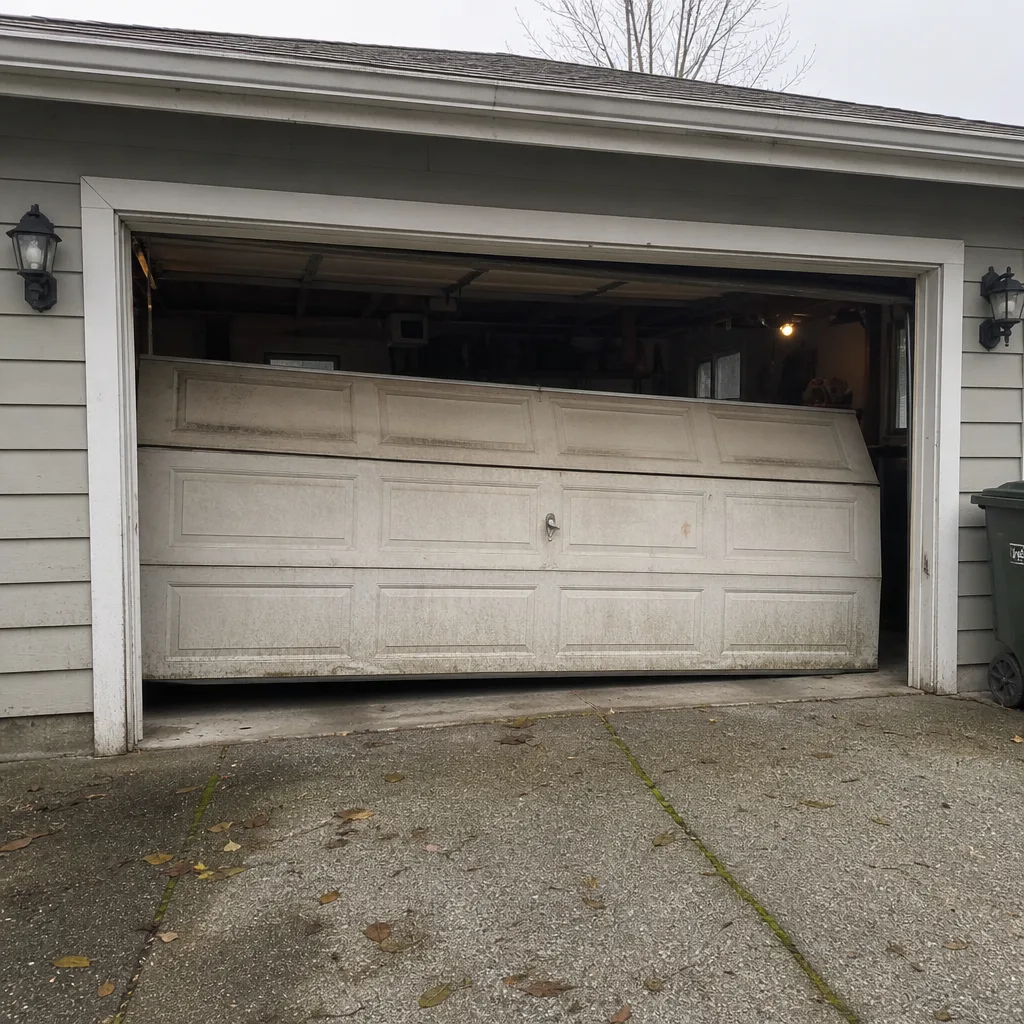 Before
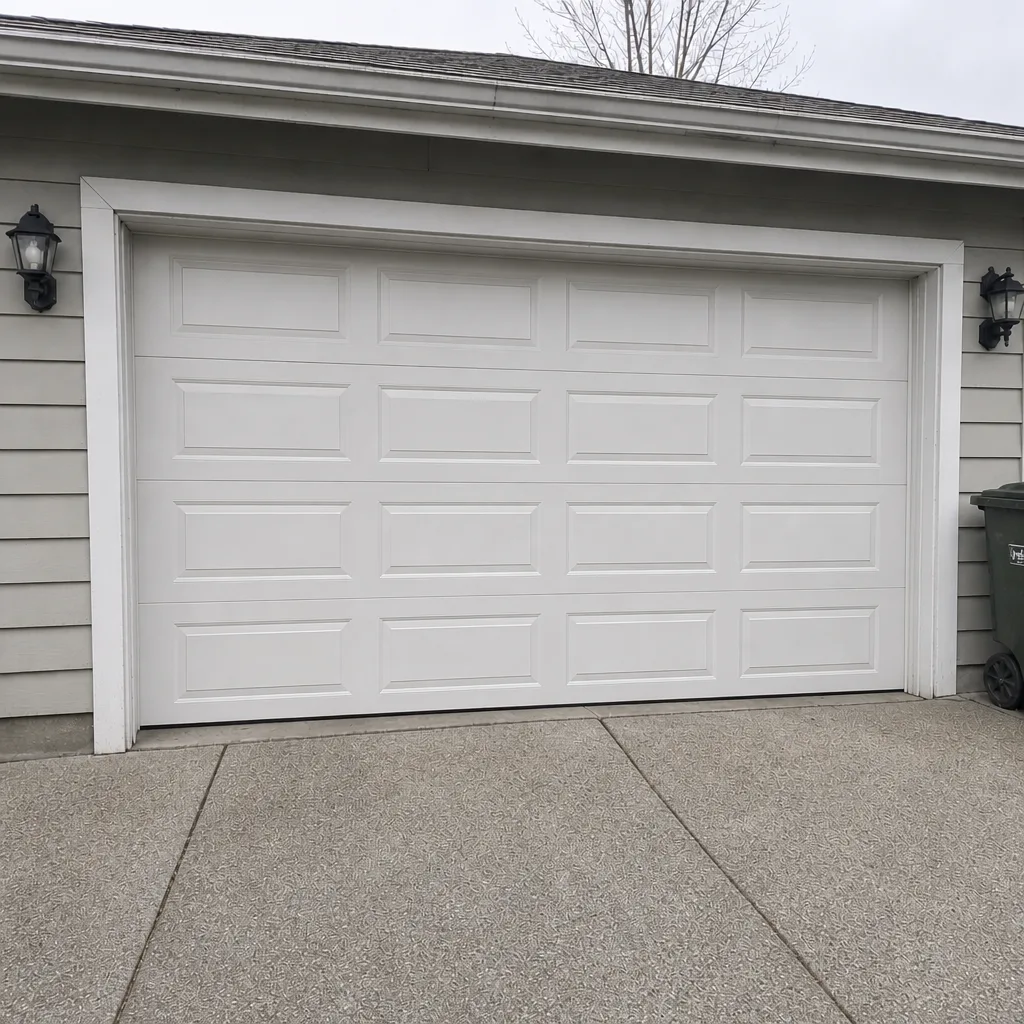 After
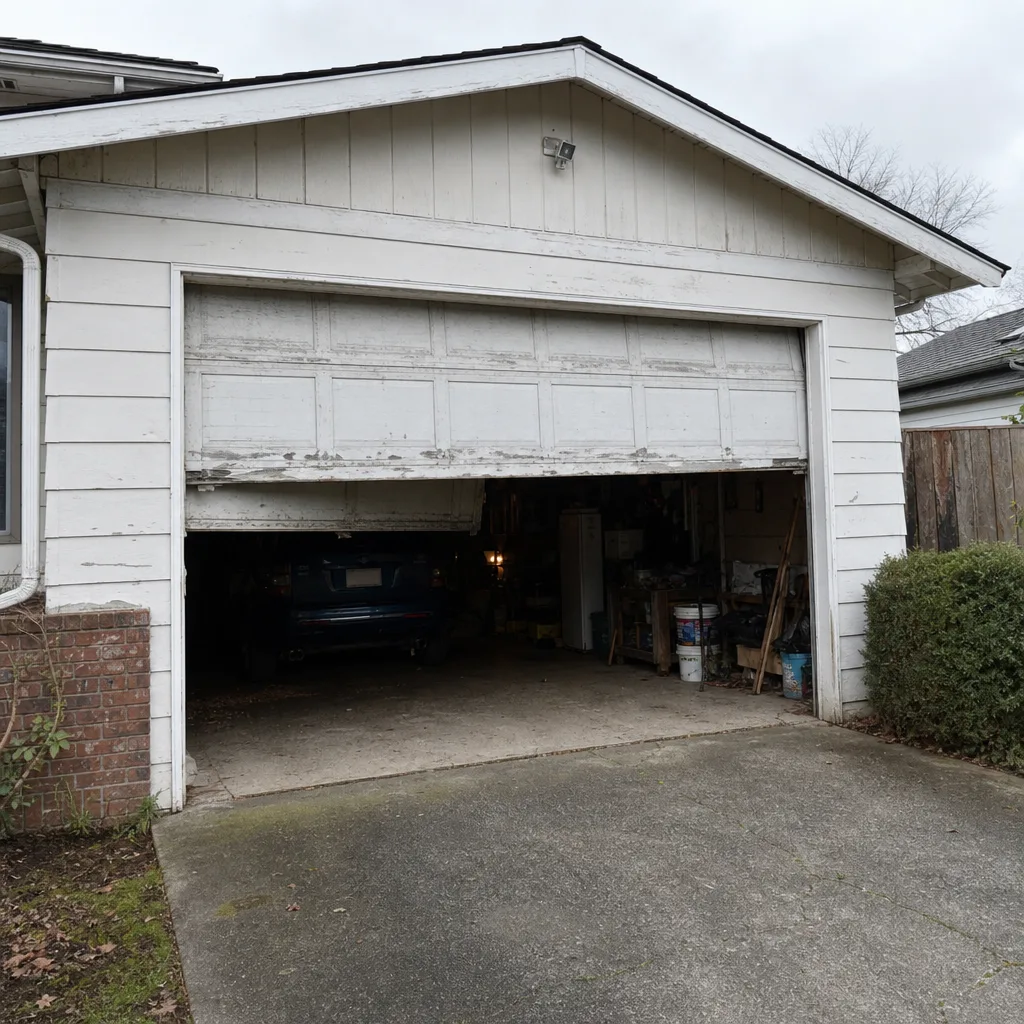 Before
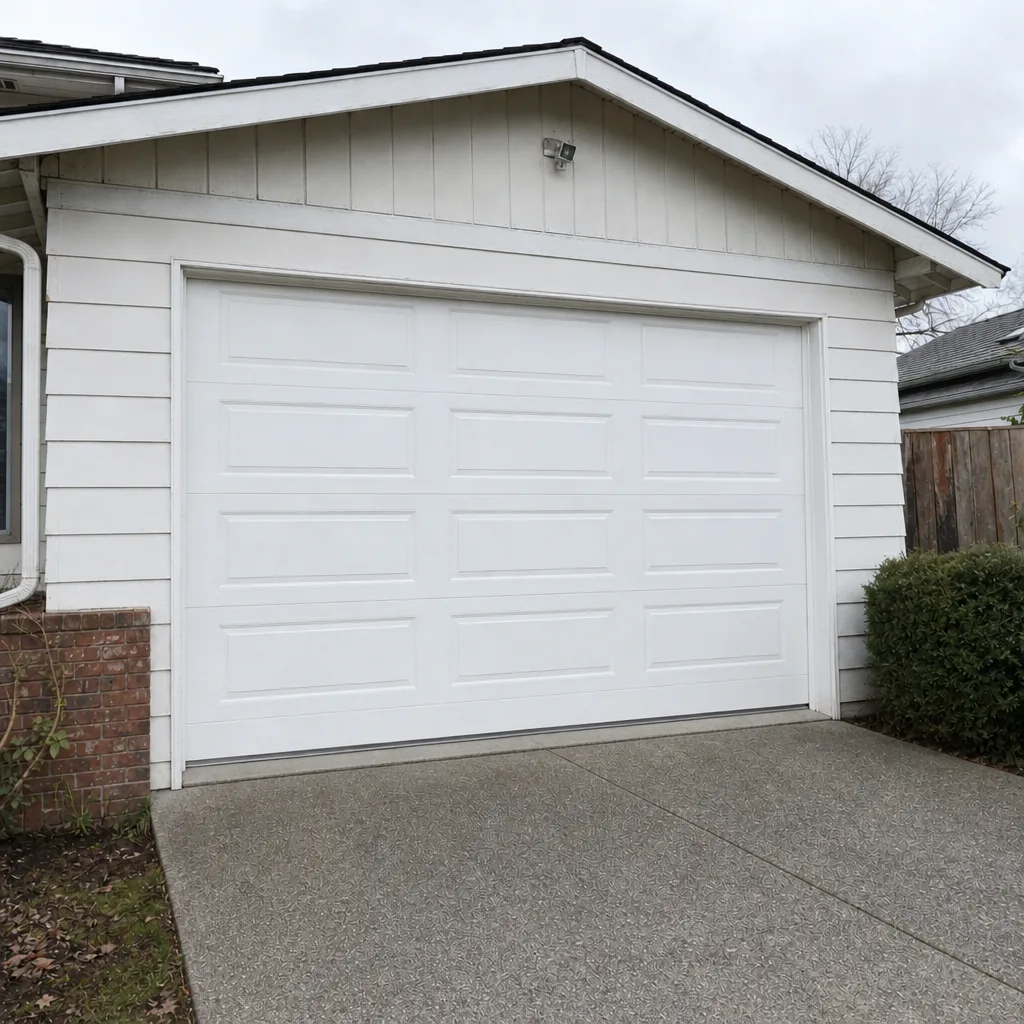 After
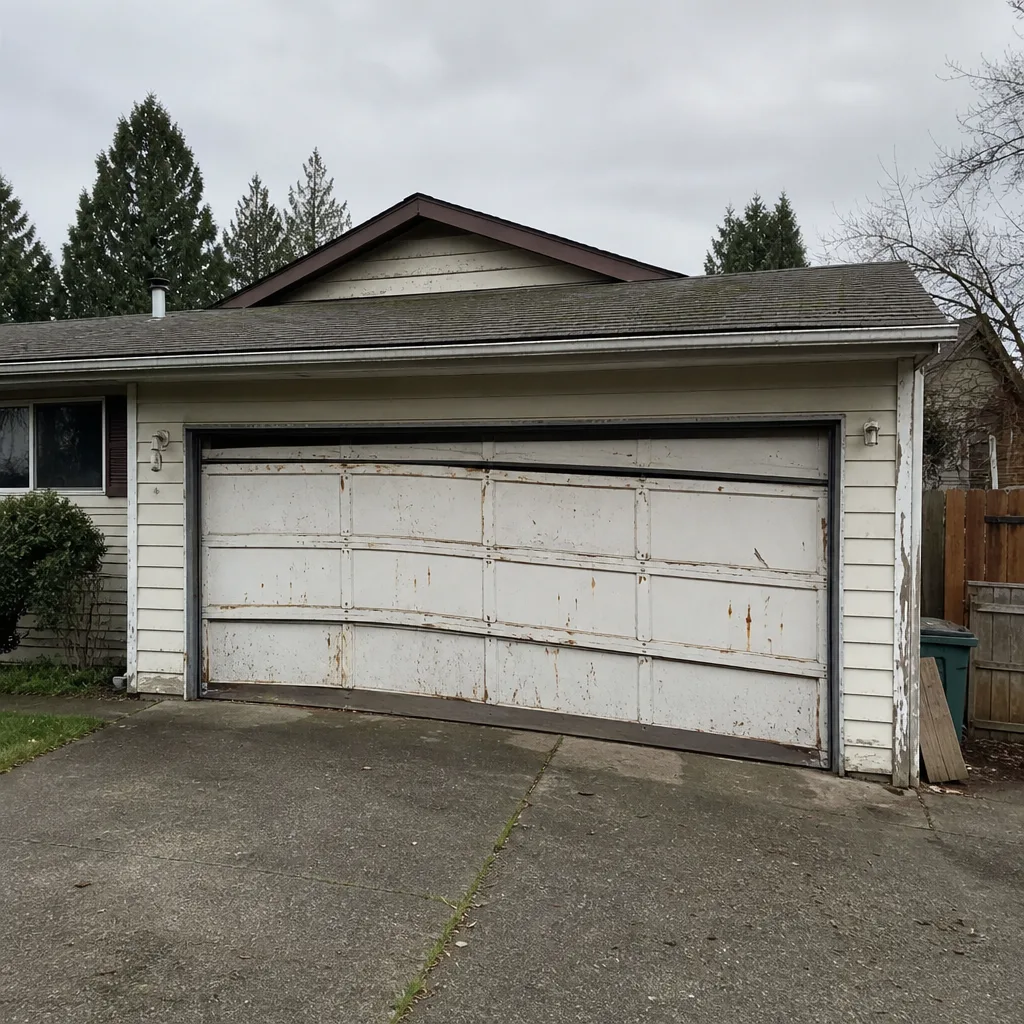 Before
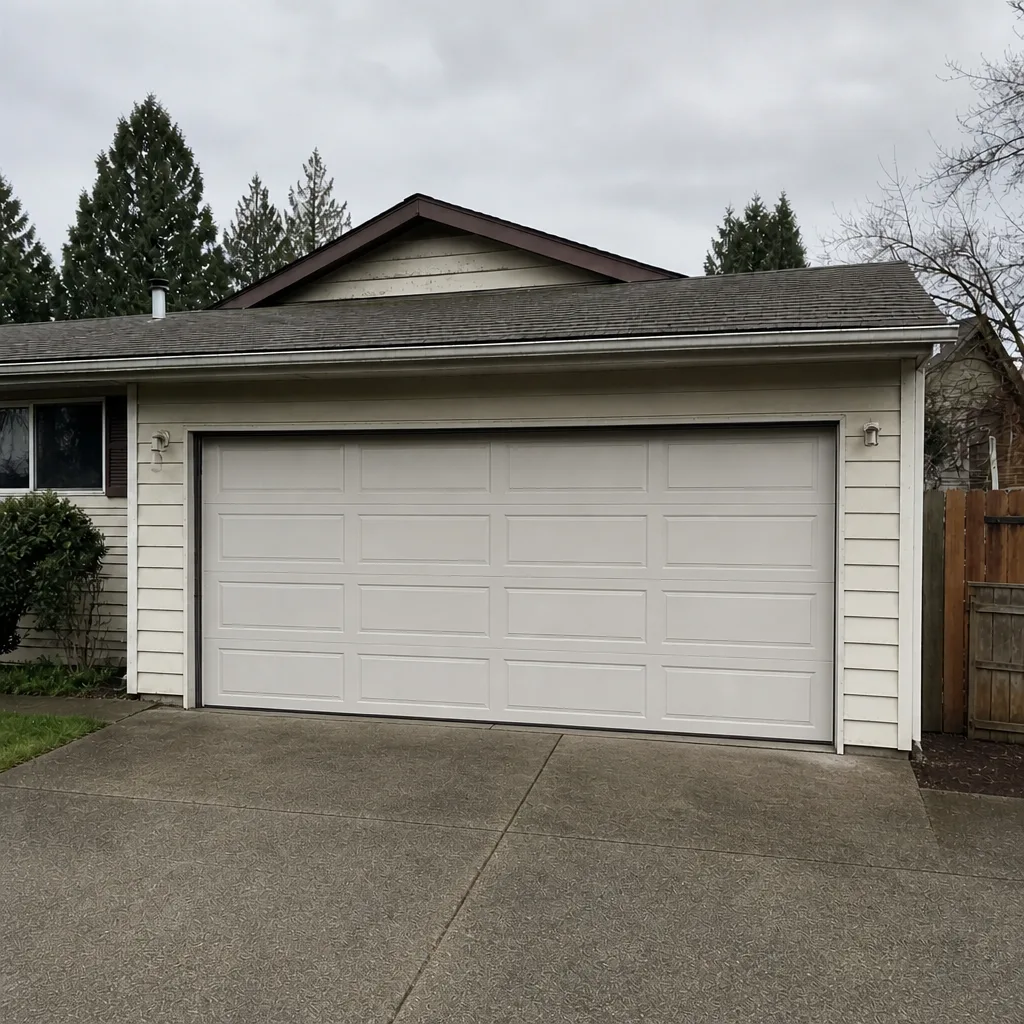 After
When to Call a Professional
Some failures are obvious emergencies. A snapped torsion spring, a door that comes off one track, a door that won’t close because the opener is running but the door isn’t moving – those are calls, not weekend projects. Springs and torsion systems should never be adjusted or replaced by a homeowner; the stored energy is enough to cause serious injury if the wrong tool or technique is used.
Other failures are less obvious. A door that’s getting slower to open. A remote that works from five feet but not from the driveway. A bottom seal that’s developed a visible gap. A single roller that’s started to squeal. These are all diagnostic visits, and a repair-first specialist can tell you what’s wearing before it fails. Puyallup Garage Door Repair Pros offers free estimates in Puyallup – call (844) 668-5460. We answer 24/7, fast dispatch from 7am to 7pm, Sunday through Friday.
Frequently Asked Questions
Garage door repair in Puyallup typically runs in the range of a standard service call plus parts, with spring replacement and opener repair as the two most common line items. The written estimate sets the final price, and we quote before any work starts. Call (844) 668-5460 for a free estimate on your specific failure.
Ask three questions on the phone: “Do you do torsion spring repair?”, “Can you repair my opener’s logic board, or do you only replace openers?”, and “Do you sell new doors?” A repair-first company answers all three plainly. A replacement-first company hedges on the spring question and treats the new-door question as the main event. The diagnostic visit confirms it: repair-first companies test before recommending anything, and put the price in writing before any work starts. Call (844) 668-5460 to book a diagnostic.
Yes. Washington requires residential contractors to register with the Department of Labor & Industries. Ask for the registration number before booking and verify it on the L&I contractor verification site. Also ask for a current certificate of insurance. If a company can’t provide both, don’t proceed. Call (844) 668-5460 and we’ll send you our details before the visit.
No. Torsion springs store enough energy to cause serious injury if the wrong tools or technique are used, and extension springs can snap back with enough force to break a wrist. This is one of the most dangerous jobs in home repair and should always be handled by a trained technician. Our technicians have up to 13 years of experience with torsion and extension systems. Call (844) 668-5460 for a free estimate.
The most common installed brands in Puyallup are LiftMaster, Chamberlain, Genie, Craftman, Clopay, Amarr, Wayne Dalton, and Raynor. If you own one of these, a specialist should recognize the brand and its specific quirks before arriving. If your brand isn’t on that list, ask the company whether they service it before you book. Call (844) 668-5460 and we’ll confirm on the phone.
No – the written quote you agree to before any work starts is the price. If the technician finds something the phone call didn’t disclose (a bent track, a broken cable), they’ll tell you and quote the additional work before starting it. You decide at each step. Call (844) 668-5460 for a free estimate.
The Bottom Line
Hiring a garage door contractor in Puyallup comes down to one distinction: is the company built to repair what you have, or built to sell you a new door? The answer isn’t in the website copy or the phone quote – it’s in the questions you ask before booking, the diagnostic sequence on the visit, the itemized quote, and the licensing verification you do in two minutes. Ask about the spring. Ask about the brand. Ask for the line items. Get the price in writing before work starts. Do those four things and the quote you sign is the one a specialist wrote, not a salesperson. Puyallup Garage Door Repair Pros works on LiftMaster, Chamberlain, Genie, Clopay, Amarr, Wayne Dalton, Craftsman, and Raynor – eight brands, one specialist, one focus: fix it, don’t replace it.
Call (844) 668-5460 for a free estimate. We answer 24/7, fast dispatch from 7am to 7pm, Sunday through Friday. The price is quoted and agreed before any work starts.
Written by the team at Puyallup Garage Door Repair Pros.